As expected, participants selected more often an internal probability phrase for known and predictable outcomes than for unknowable outcomes. To describe the four knowable outcomes, a large majority of participants selected an internal probability phrase as more natural than an external one (88%, see Table 2). For predictable outcomes, the preference for an internal or external source of uncertainty was less strong, with three phrases out of four where participants preferred the internal version, forming overall a smaller majority (64%). Regarding the future outcomes, one can also see that the preference for the first person pronoun subject was stronger when the statement was about the speaker and featured a first person pronoun. The only item for which "it" was preferred among the future outcome was for the future results of a Swedish football match. This preference may have been the result of a contrast between this question and the previous one that focused on the past result of the Swedish team and for which participants largely preferred the "I" prediction.

This echoes findings of Experiment 1, showing a mirroring effect in conversation. Finally, for unknowable outcomes (i.e., life on other planets and Robin Hood), participants preferred external probability phrases, although this preference was significantly different from 50% only for the Robin Hood sentence. Limited evidence suggests that hearers take linguistic markers of uncertainty into consideration when interpreting uncertainty. When making inferences, the hearers expected a higher probability threshold to be convinced by "I" probability phrases than by "it" probability phrases (Løhre & Teigen, 2016).

Participants judged that a 60% external probability was the minimal probability required to advise a patient to take a new treatment, whereas the threshold was about 69% for an internal probability phrase (Løhre & Teigen, 2016). The same pattern was found in different contexts, such as regarding advice in exam revision. However, the effect of the subject on perceived knowledge of the speaker was not consistent across the five experiments.

When making decisions, the communicated source of uncertainty had a more consistent effect. In Fox and Malle's studies , participants made simple binary choices and read an internal and an external probability phrase describing each option, as in Example 3 below. Most participants (60–70%) preferred the house where the expert described the earthquake risk with an internal probability phrase. The finding was replicated with different vignettes in two other studies.

Why Do People Say Am Instead Of IM Overall, the two experiments presented here complement and extend the current literature in several respects. First, the knowability of an outcome is a good predictor of the preference for internal and external probability phrases. Participants preferred strongly internal phrases for known outcomes – defined as established historical or geographical facts – whereas this preference was less strong for predictable outcomes and even the opposite for unknowable outcomes. Second, speakers have a slight preference for internal probability phrases (e.g., "I am not certain"). However, this preference depended – in addition to the knowability – on the likelihood of occurrence of the outcome as well as the conversational context. This general internal preference and the role of the probability magnitude replicates prior findings (Fox & Malle, 1997).

Third, and more novel, participants tended to choose more often a probability phrase that mirrored the source of uncertainty used by their conversational partner . We hypothesized that markers of the source of uncertainty used in probability phrases would affect the recipients' judgments about the speaker as well as their subsequent decisions. This expectation is consistent with prior research (Løhre & Teigen, 2016).

Specifically, we expected that recipients would perceive speakers uttering an external probability phrase as more knowledgeable and less supporting of the outcome. We expected that recipients would interpret external probability phrases as being based on outcome frequencies and as being more informative than internal probability phrases. Finally, we expected that recipients would be more likely to use external probability phrases to guide hypothetical bets than internal probability phrases. The results of the present experiment illustrate that recipients can draw inferences from the pronoun subject used in a prediction. Participants use the grammatical subjects of probability phrases to draw inferences about the prediction and its speaker.

These inferences are consistent with the assumption that the grammatical subject of a probability phrase is a marker of a speaker's source of uncertainty and that the source of uncertainty conveyed has psychological implications for the hearer. For example, participants perceived an external probability phrase as more statistically based and more informative than internal probability phrases. Given that uncertainty for past outcomes relies more on internal uncertainty, we hypothesized that people would prefer internal probability phrases ("I" probability phrases) when describing past outcomes (vs. present and future outcomes). Further, building on Fox and Malle's findings, we expected that participants would prefer to communicate higher probabilities with internal phrases, and medium or low probabilities with external phrases.

Regarding the conversational context, our assumption was that contradicting a person is face-threatening (Brown & Levinson, 1987), which could be softened by the use of an internal probability phrase (i.e., belonging to the person). In contrast, we expected participants to prefer external probability phrases, as reflecting a more objective reality (i.e., belonging to the world) when confirming a previously voiced opinion to strengthen the effect of the agreement. Finally, given that internal probability phrases can be taken as more subjective, we expected a lower perceived disagreement between two internal probability phrases than between two external probability phrases. The present research brings some innovative findings about the factors that drive the preference for internal and external probability phrases. Results showed that participants exhibited consistent preference patterns, depending on their subjective probability, the degree to which knowledge could reduce uncertainty and, in dialogue, based on the source of uncertainty conveyed by a dialogue partner.

The present paper demonstrates that pronoun subjects are used as linguistic markers of the source of uncertainty of the speaker, and that they affect recipients' judgments and decision-making. Many predictions are not done in a conversational vacuum. Hence, we also investigated the role of previously voiced opinions on participants' preferences for internal and external probability phrases. Our findings showed that participants mirrored the source conveyed by their conversational partners, whether they agreed or disagreed with them . Further research could focus on the effect of internal and external probability phrases on recipients' perceived source of uncertainty.

In our experiment, participants aligned their speech to their dialogue partner by making the same lexical choice and reusing the same pronoun subject. We propose that one of the mechanisms underlying the preference for internal or external probability phrases relies on the knowledge of the outcome and the instrumentality of this knowledge to assess uncertainty. Building on the "knowability" dimensions proposed by Chow and Sarin , we investigated the preference for internal and external probability phrases for known, predictable and unknowable outcomes. We expected that participants would use more internal probability phrases for known or predictable outcomes than for unknown outcomes. We derived hypotheses based on existing empirical evidence showing that participants preferred to use internal probability phrases made by experts. This was related with the perception that experts "took responsibility" in their prediction by using a first person pronoun.

In contrast, participants preferred to use the external probability phrases of novices, which they felt reflected a greater responsibility than internal probability phrases (Fox & Malle, 1997). We expected the results to be mirrored for expert speakers. Fox and Malle identified a general preference for external probability phrases that can change with contextual factors. Most participants deemed external probability phrases to be more appropriate than internal ones to predict a range of 16 world outcomes. For example, 78% of the participants predicted the outcome of the 1992 American presidential election with an external probability phrase . The subject pronoun was shown to relate to the probability conveyed by the speaker.

Furthermore, knowledge and expertise of a speaker moderates the use of external phrases. For example, speakers selected a confidence term to describe self-related events more often than to describe world events (e.g., "I will go to bed before midnight") (Fox & Malle, 1997; Ülkümen et al., 2016). Interestingly, more knowledgeable speakers were more willing to communicate their uncertainty with confidence terms than less knowledgeable speakers (e.g., Americans predicting the outcome of the American election vs. the German election).

We offer here insights into the properties of probability phrases, the determinants of their selection and their effects on the judgments and decisions of recipients. The difficulty of communicating uncertainty has led some regulatory bodies (e.g., the IPCC for climate change) to recommend the use of a reduced list of probability phrases. However, these lists do not feature the pronoun subject to be used and, hence, still leave room for variability. The features of probability phrases can be seen as a challenge but could also be seen as an asset that could be harnessed to develop more effective risk communication guidelines. For example, experts should use more internal probability phrases to appear more convincing whereas novices may be more effective by using external probability phrases. Hence, the preference for the external source could have been driven by the negative directionality of the lower probability phrases, and the preference for the internal source by the positive directionality of the high probability phrases.
Negative probability phrases attract the recipients' attention towards the possibility that the target outcome will not occur (Juanchich, Teigen & Villejoubert, 2010; Sher & McKenzie, 2006). Using a first person pronoun negative directionality phrase may amount to acknowledging less and less certainty which participants may have wanted to avoid. In contrast, using an external negative low probability phrase may simply indicate that new evidence shows that the event is less likely than before. A corpus study of people's preferences could also offer a more ecologically valid picture of people's preference. The two following experiments tested the factors driving speakers' preferences for communicating internal and external probability phrases. Previous research indicated that recipients may draw some inferences from the use of internal and external probability phrases such as speakers' levels of knowledge or the nature of the evidence they used (Fox & Malle, 1997; Løhre & Teigen, 2016; Ülkümen et al., 2016).

However, the pattern of inferences drawn in previous research was not consistent. In Experiments 3 and 4, we assess the impact of internal and external probability phrases on the recipients' inferences and their decisions. Experiments 3 and 4 aim to replicate and broaden previous findings by showing that linguistic markers of the source of uncertainty affect the judgments and decisions of recipients (Fox & Malle, 1997; Løhre & Teigen, 2016; Ülkümen et al., 2016). The source of uncertainty conveyed via the pronoun subject of the probability phrase did not have a main effect on the decision, but it interacted with the probability conveyed by the speaker and with his expertise to affect willingness to bet.

Participants were more willing to use a low external probability phrase than a low internal probability phrase in betting but would rather use a high internal probability phrase than a high external probability phrase . Further, participants were somewhat more willing to bet based on an internal probability phrase voiced by an expert, but keener to bet based on an external probability phrase voiced by a novice . We propose that perceived group biospheric values may similarly relate to pro-environmental behaviour as personal values, but via the environmental identity at the group level. That is, the more people think their group cares about the environment, the more likely they are to see the group as a group that acts environmentally friendly. This stronger environmental group identity may, in turn, promote pro-environmental behaviour.

Group identities have been found to influence pro-environmental behaviour . However, most group identities studied before were not directly linked to the environment. For instance, a left-wing political identity was found to influence attitudes towards climate change policy . Yet, a few studies investigated constructs similar to environmental group identity, such as "green consumer," suggesting that such group identities are promoting pro-environmental behaviour . Nevertheless, to our knowledge, there has not been a study linking group environmental values and group environmental identity together to reveal their relationship with pro-environmental behaviour.

Thus, we will extend the current knowledge by investigating the relationship between group biospheric values, environmental group identity and pro-environmental behaviour. We will test if this pathway influences environmental behaviour in addition to the personal pathway, where the association between personal biospheric values and pro-environmental behaviour was mediated by environmental self-identity. In the five scenarios, participants chose a different pronoun subject as a function of the probability of occurrence of the outcome and the conversational situation. Participants used more internal probability phrases to express high probabilities than to express medium probabilities.
We also propose that linguistic markers of the source have consequences for the subjectivity perception of recipients. Our position is that recipients infer the level of subjectivity of speakers based on their source of uncertainty, together with the characteristics of the context (e.g., who is speaking, in which context, about which outcome). This model emphasizes the importance of the context, similarly to the model proposed by Fox and Irwin . In our model, the source of uncertainty and the subjectivity are not psychologically independent given that the source of uncertainty is a determinant of subjectivity. The interaction effects found in Experiment 1 and in Experiment 4 support the view that the sentence subject of probability phrases does not translate directly into a level of subjectivity.

Overall, our data suggest that the nature of the outcome and the context in which it is predicted drive the preference for internal and external probability phrases. As Shawn says, in general we can't leave out the subject of a sentence in the same way as you can in some Latin languages. Our verb forms don't vary much, so you need to hear the subject to understand the sentence.

With some verbs and in some phrases, though, you can drop the subject, in informal speech. ' is an example of a informal phrase without a subject. Native speakers know instinctively when you can and can't drop the subject, and - in most cases - you can't.

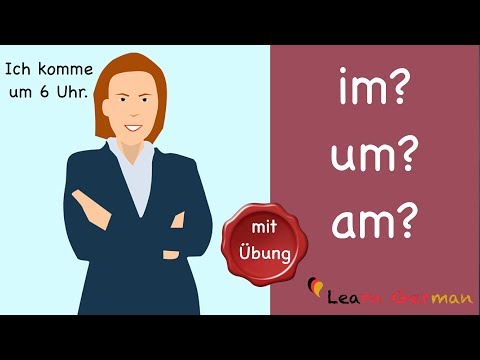
As for 'am' instead of 'I'm' , no, we never say that. This is probably because it's just as quick and easier to say the full form. The only time that 'am' is ever used without the 'I' is when we are writing informal notes, messages, texts and so on. You might write a note to your friend or family saying something like 'Am in town. This 'telegram' style of writing is quite common in casual messages. Therefore, internal and external probability phrases were perceived as conveying the same level of probability.

These results highlight that participants infer that speakers using a neuter third person pronoun rely more on an external source of uncertainty. The sentence subject was also related to perception of subjectivity, but this effect was dependent on the strength of the belief conveyed by the speaker. The judgments of informativeness and willingness to use in betting depended on both the grammatical subject and the probability conveyed.

In the next experiment, we assessed the role of the expertise of the speaker by manipulating it. Further, we improved the design by randomizing the order of the predictions and of the questions. Therefore, internal and external probability phrases were perceived as conveying the same levels of probability. Given that speakers use contextual cues to decide whether it is best to say "I am uncertain" or "It is uncertain", then we can assume that the pronoun subject carries pragmatic implications for recipients. More generally, the hypothesis that language has a strong pragmatic layer fits a functional approach of language . Importantly, we test the relevance and the robustness of the personal and group pathways in predicting pro-environmental behaviour in an individualistic country (i.e., the Netherlands) and a collectivistic country (i.e., China).

Teigen and Løhre disagreed with the proposition that the subject describes the subjectivity of uncertainty and not its source. They agree that the subject is a clue for subjectivity, but they argue that this is because it indicates who or what is being uncertain. The argument for the claim that the subject of probability phrases marks the source of uncertainty is that the same probability term, such as "uncertain", can be used with different subject pronouns, some of which refer to an object or to nothing (e.g. Known and knowable outcomes are more often described with internal probability phrases.

Our data did not show that the timing of an outcome would affect the preference of markers of the source of uncertainty. This appears to contrast with previous findings that the time of occurrence of an outcome is an important factor in determining the source of uncertainty (Brun & Teigen, 1990; Kahneman & Tversky, 1982). Our result complements the findings of Ülkümen et al. who found that future outcomes were more often described with likelihood quantifiers, albeit not after controlling for other aspects of the sentence (e.g., control, source). The next experiment aimed to further look into the time of occurrence of an outcome in conjunction with the level of knowledge regarding this outcome. In conclusion, our results indicate support for the well-established personal pathway and, to a lesser extent, for a newly proposed group pathway.

Specifically, we replicated earlier findings that personal biospheric values can, via environmental self-identity, predict pro-environmental behaviour and extended these findings to participants from a collectivistic culture. Importantly, personal and group factors were also related to each other, which explains why effects of group factors may appear less important when controlling for personal-level factors. Interestingly, however, our result also suggests that perceived group values and identity may influence pro-environmental behaviour via the personal pathway, particularly in our Chinese sample. Specifically, the group biospheric values and environmental group identity may influence the environmental self-identity and thereby promote pro-environmental behaviour.

This observation could be interpreted as being in line with earlier theorising, which suggests that self-identity development is influenced by others and in-groups (Cooley, 1902; Tajfel and Turner, 1979; Smith and Henry, 1996). Yet, future research is needed to test if the group pathway indeed influences environmental behaviour via the personal pathway. Indirect effects of biospheric values on pro-environmental behaviour via environmental identity at the personal and group level in Dutch and Chinese participants, bootstrap analysis. In both countries, participants were presented with the study introduction and started the online or hardcopy questionnaire after giving their informed consent.

Questions on personal, perceived group values, environmental self-identity and group identity were presented, followed by the measures of their daily pro-environmental behaviour. Then, they were asked to indicate their product preference in a choice scenario; however, this measure was not used in the current study2. Results of how both pathways worked in environmental purchasing preference were similar as for pro-environmental behaviour. Speakers uttering an internal probability phrase may have been perceived as more supportive of the target team because they also conveyed a higher probability that the team would win.



No comments:
Post a Comment
Note: Only a member of this blog may post a comment.